
You had me at Social Distancing
Why lockdowns are accelerating a change that needed to happen anyway.
(Updated: )

Matt Casey
Co-Founder of DoThings.
Update: Since writing this, I have had a complete change of heart about remote working and no longer think what I’ve written here is true. You can read my current thinking here: Wait, does working from home suck?
I live in London. I love it here, but sometimes I wonder what the hell I’m doing to myself. It’s filthy, it’s loud, we don’t technically have air, my dog keeps eating vomit, and it’s absolutely full of the general public. Horrible. It’s an amazing city, but cities themselves are starting to feel like an out of date idea to me. When Covid started picking up steam and the recommendation for social distancing was made, I was troubled not one little bit: I’ll see your social distancing, and raise you an emotionally unavailable. I was born for this.
Fortunately, at DoThings we already worked entirely remotely. Our team is spread all over the world, and despite this it really doesn’t feel like we don’t work together. We talk regularly through Slack, we organise ourselves and stay aligned with Notion, and if we want a real conversation we get on a call. Working this way is normal for us, but Covid has pushed the issue of remote working front and centre for a lot of businesses that have previously been resisting it. If you weren’t previously open to the idea, all of sudden you’re faced with a situation where you don’t really have a choice.
For a long time, I was reluctant to embrace remote working myself. Even though I knew technically all the work could be done from anywhere, I still felt that there was something to be said for having everyone together. If I’m being completely honest, when I finally did commit to remote working it was for entirely personal reasons. I still believed it wouldn’t be as efficient as working in an office, but I just wanted the freedom anyway. As it’s turned out, I now think it’s better for the business too. But there are things you have to understand if you want to get the real benefit from it.
No Office also means no Office Hours
One of the main benefits I’ve found is that I can work to my own natural rhythms now. That probably sounds more hippyish than I intend it to. What I mean is that I’m able to take advantage of the times where my brain seems ready to work. When I used to work in an office, I would frequently wake up at about 5am and not be able to get back to sleep. I’d be thinking about something I wanted to do that day, and find it difficult to relax again. But I’d always try. Eventually I’d fall asleep again, wake up later, then get up and go to work. I’d get coffee, chat to people, have the morning stand-up, then usually actually get working at about 10am.
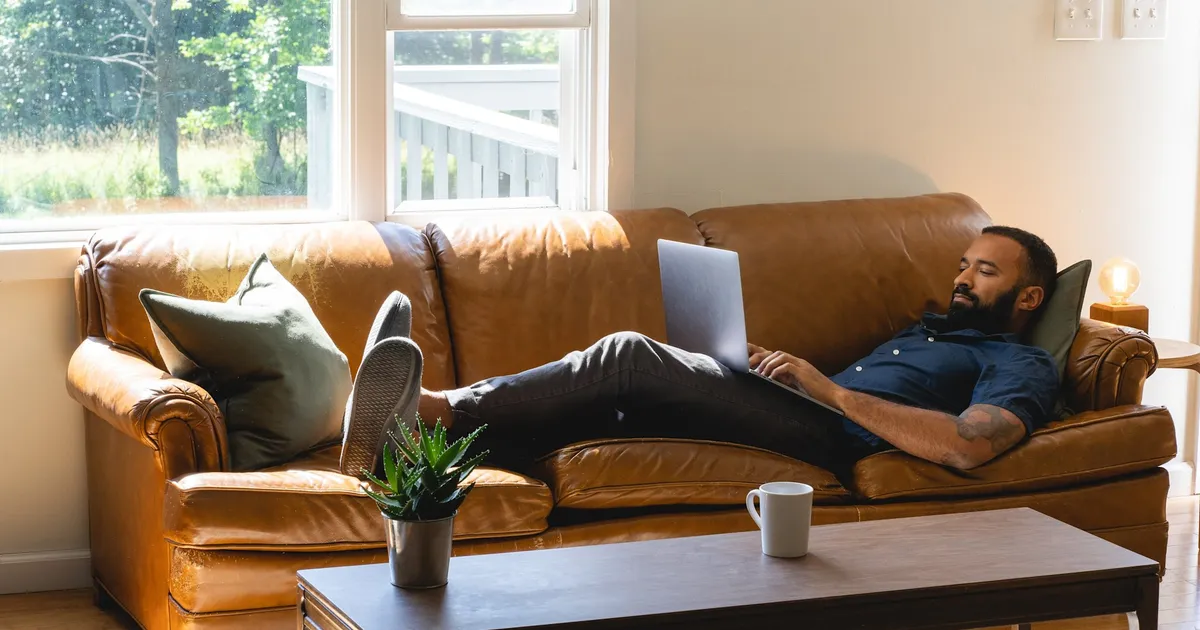
When I started working from home, I noticed something changed. I’d wake up at 5am, and instead of trying to get back to sleep, I’d just get up. I found that I was insanely productive. I’d walk straight to my laptop, and was able to work in an incredibly focused way. Before I knew it, 3 or 4 hours would have passed. At about 9am I’d go take a shower, then take my dog for a walk. What I realised was that if you looked at what I’d achieved by 9am when working from home, it was usually more than I would have done in an entire day at the office - 4 hours of solid uninterrupted work is a rare achievement in an office environment. This meant that if I did nothing else, my day could still be considered productive. Working from home had effectively given me the entire day to do whatever I wanted with. Free of any pressure, I would generally focus on work that I found interesting, or things that I’d been putting off. Or sometimes I’d just take it easy.
One of my co-founders works totally differently. He will be completely unreachable for the entire day, but then I’ll go to sleep, wake up the following morning, and find he’s been up all night and completed a crazy amount of work. Frequently I’d wake up to completed work that I thought was going to take weeks to deliver. I started jokingly referring to him as Santa Claus, silently delivering me presents overnight.
These benefits are only available to you with remote working if you also ditch the rigid adherence to office hours. Yes, for certain jobs the office hours are necessary, but not all of them. When the situation allows, we should free people up to work not just where works best for them, but also when.
Talent Intelligence is Key
Even when everyone is in the same building, ensuring there is visibility and understanding of who is good at what and who wants to work where is a huge help when managing a team. Once everyone is scattered around in different locations, it really becomes a non-negotiable. In an in-office world, a manager could arguably glean a lot of important information just from being around people day-to-day. You can gain a lot of knowledge by osmosis. This is absolutely not the case once remote work is the norm. When everyone is working remotely, you need a talent assessment process that surfaces people’s skills and ambitions in a reliable way, or they’ll end up feeling abandoned.
Letting go of the old way
I think for a huge number of companies now, it would be really sensible to evaluate if the amount of money spent on renting office space to bring everyone into the same physical location - especially in a city like London - is really worthwhile. Embracing the tools to enable remote work was a good idea before Covid, and I’m hopeful that when this all blows over, companies will stick with this way of working.